La Palette de Van Gogh

Une expérience écrite et réalisée par Agnès Molia et Gordon

Un univers multisensoriel

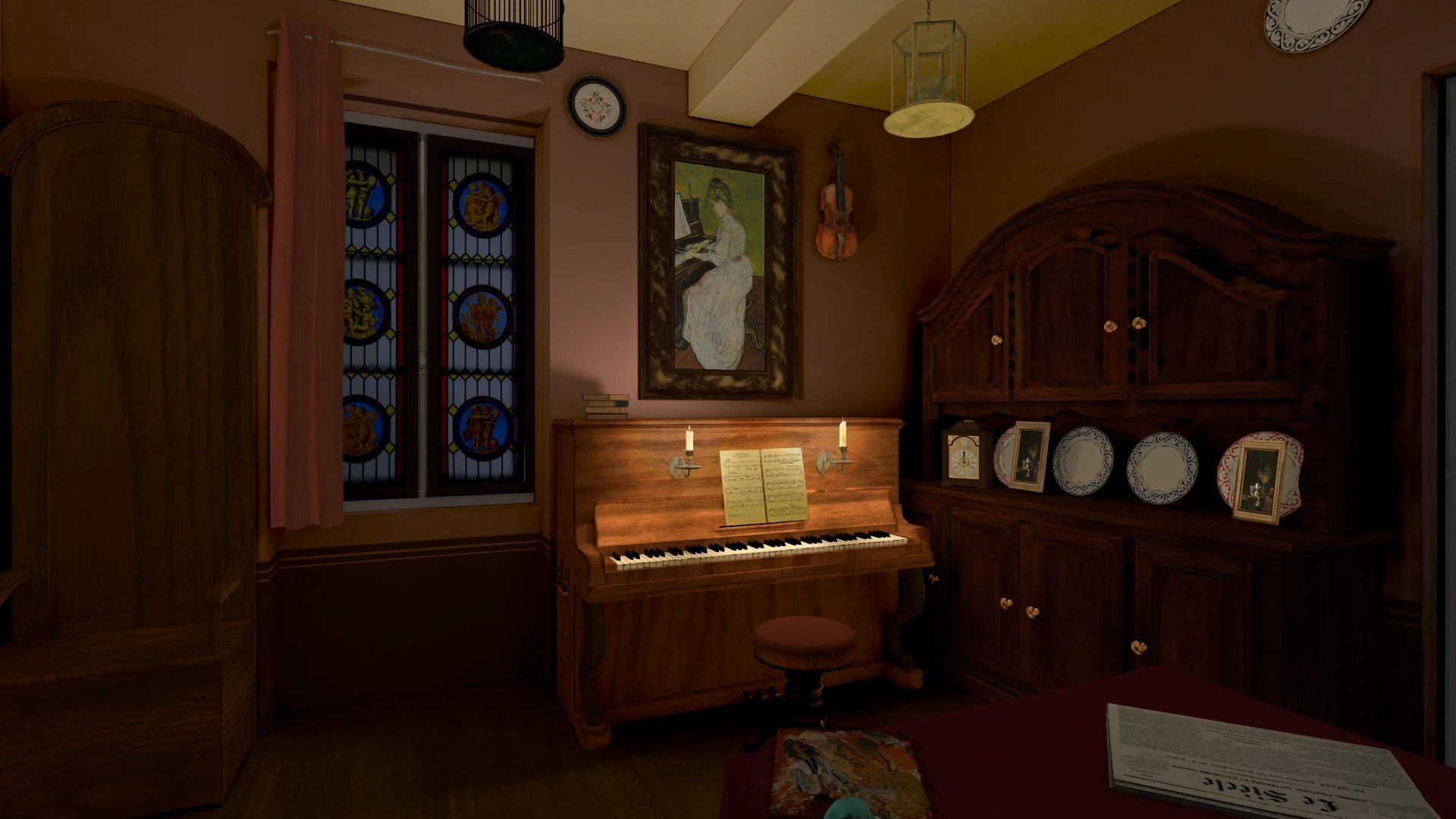
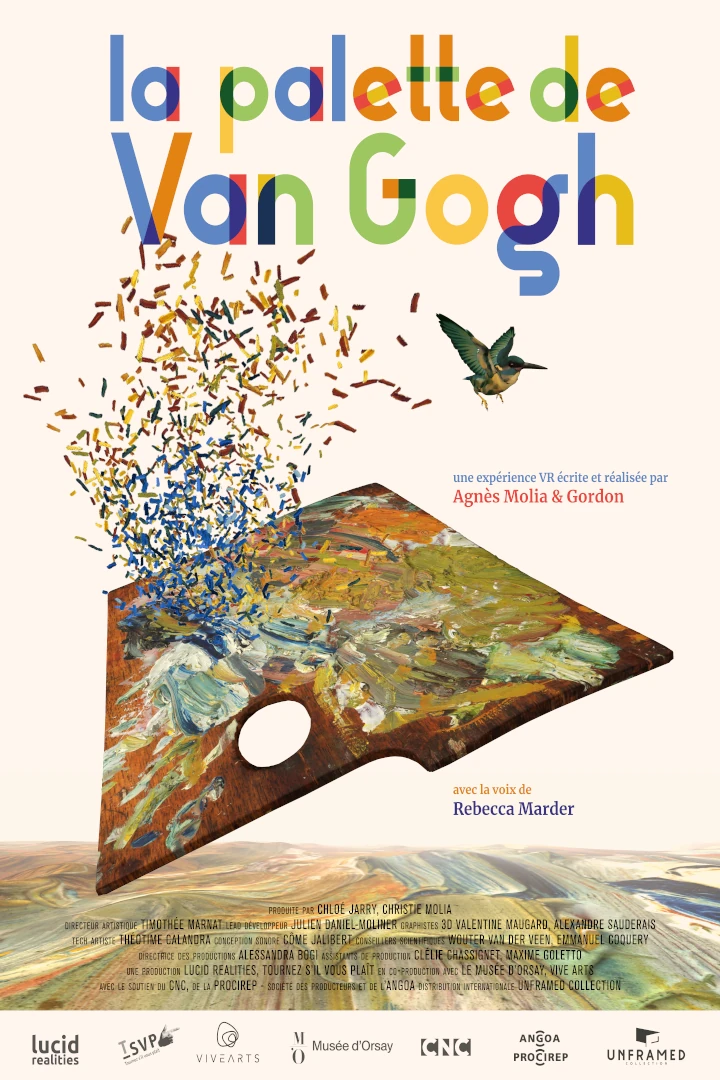
Vincent van Gogh passe les deux derniers mois de sa vie à Auvers-sur-Oise, où réside le docteur Gachet, ami des impressionnistes, ­collectionneur et peintre amateur. Le 27 juin 1890, le docteur prête à Van Gogh une palette pour que l’artiste puisse achever le portrait de sa fille Marguerite.

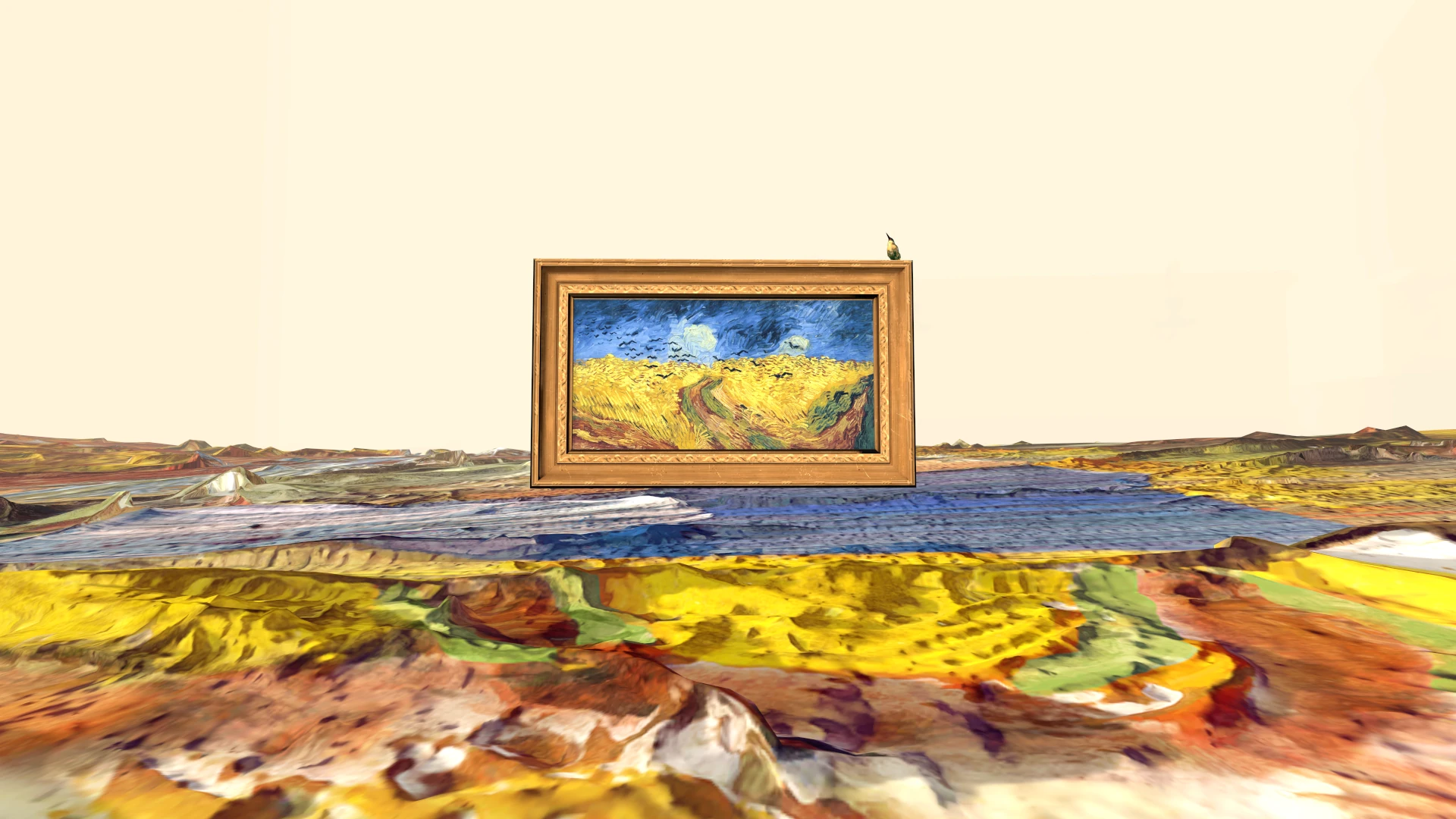
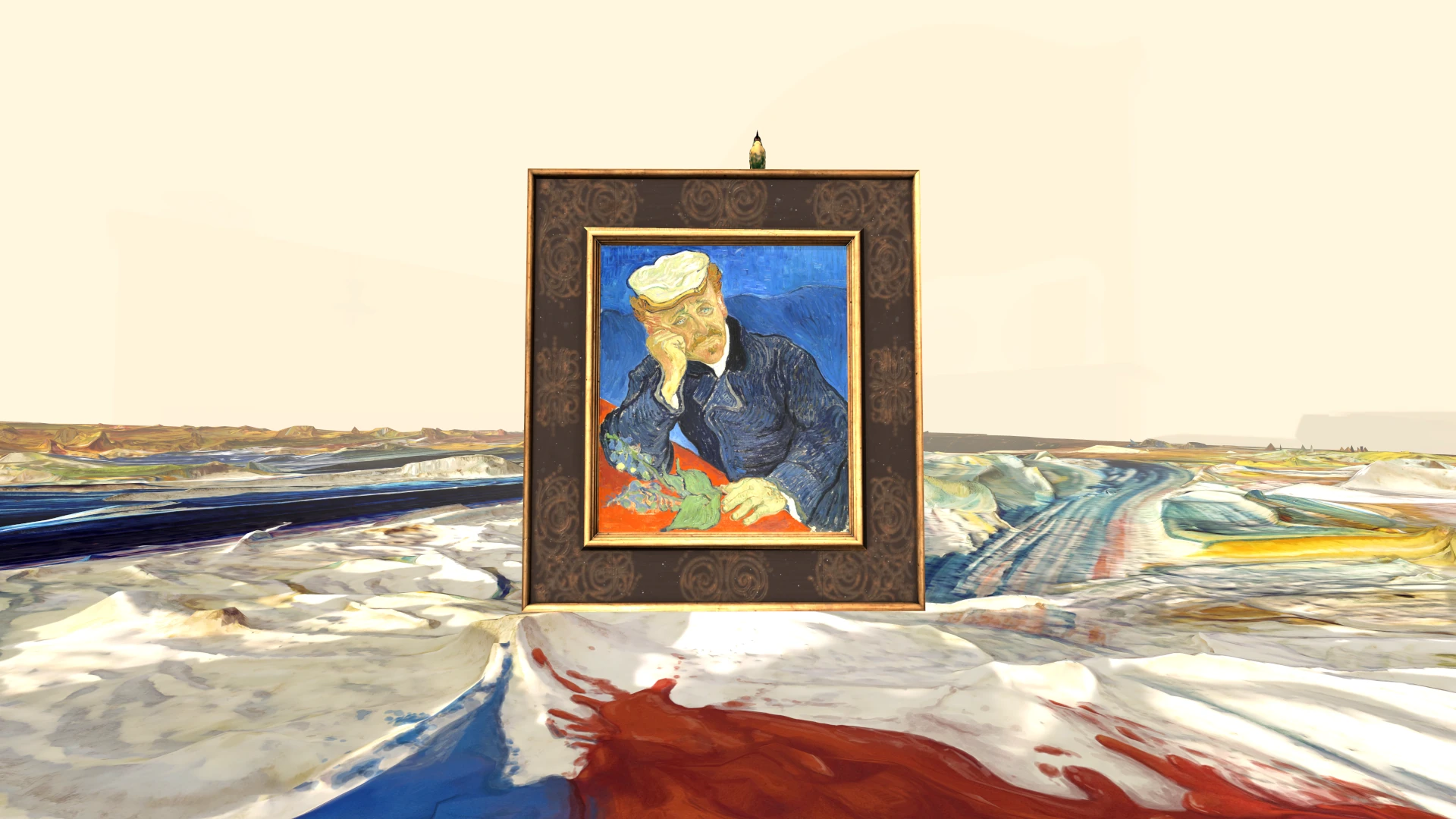
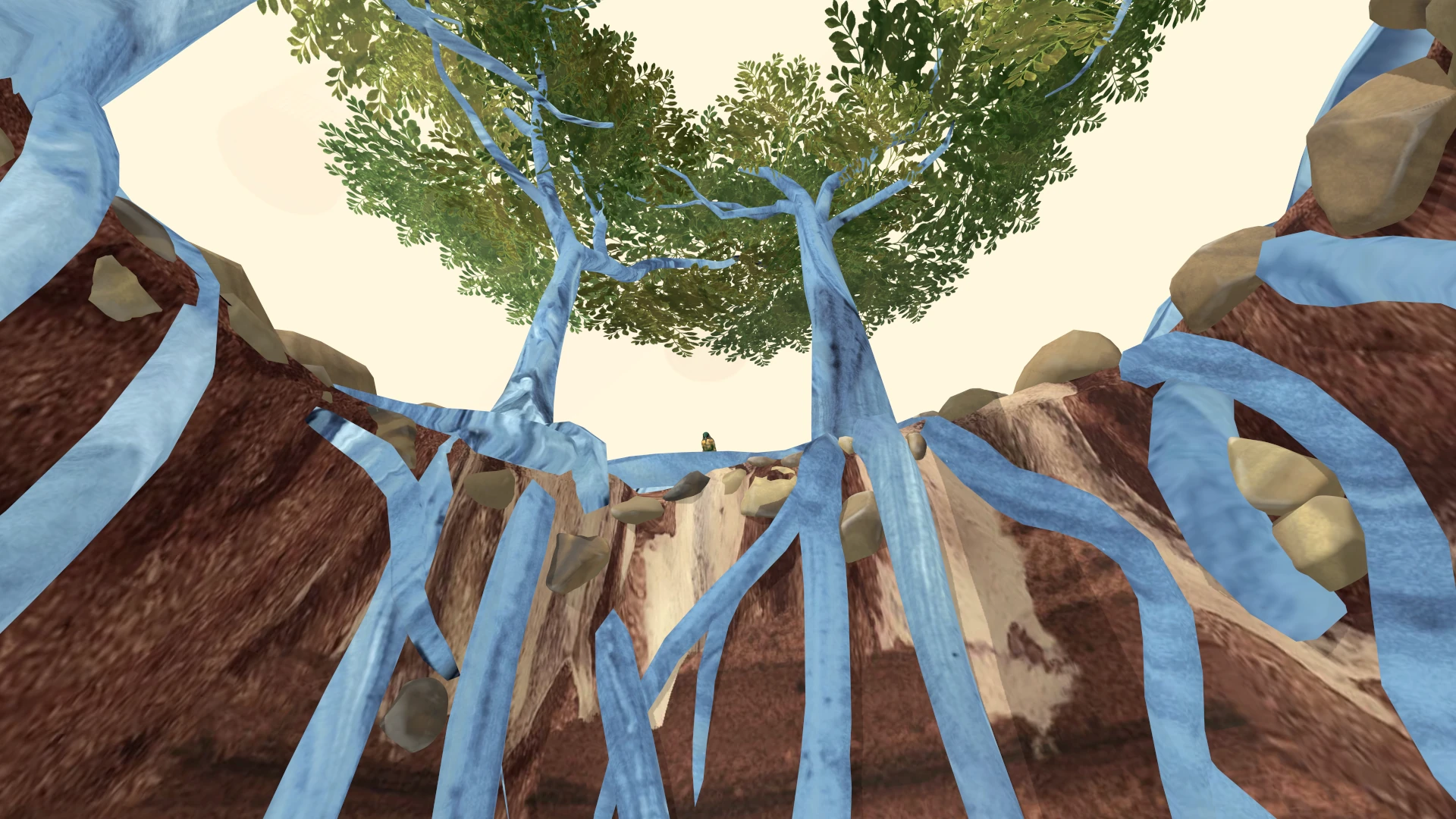
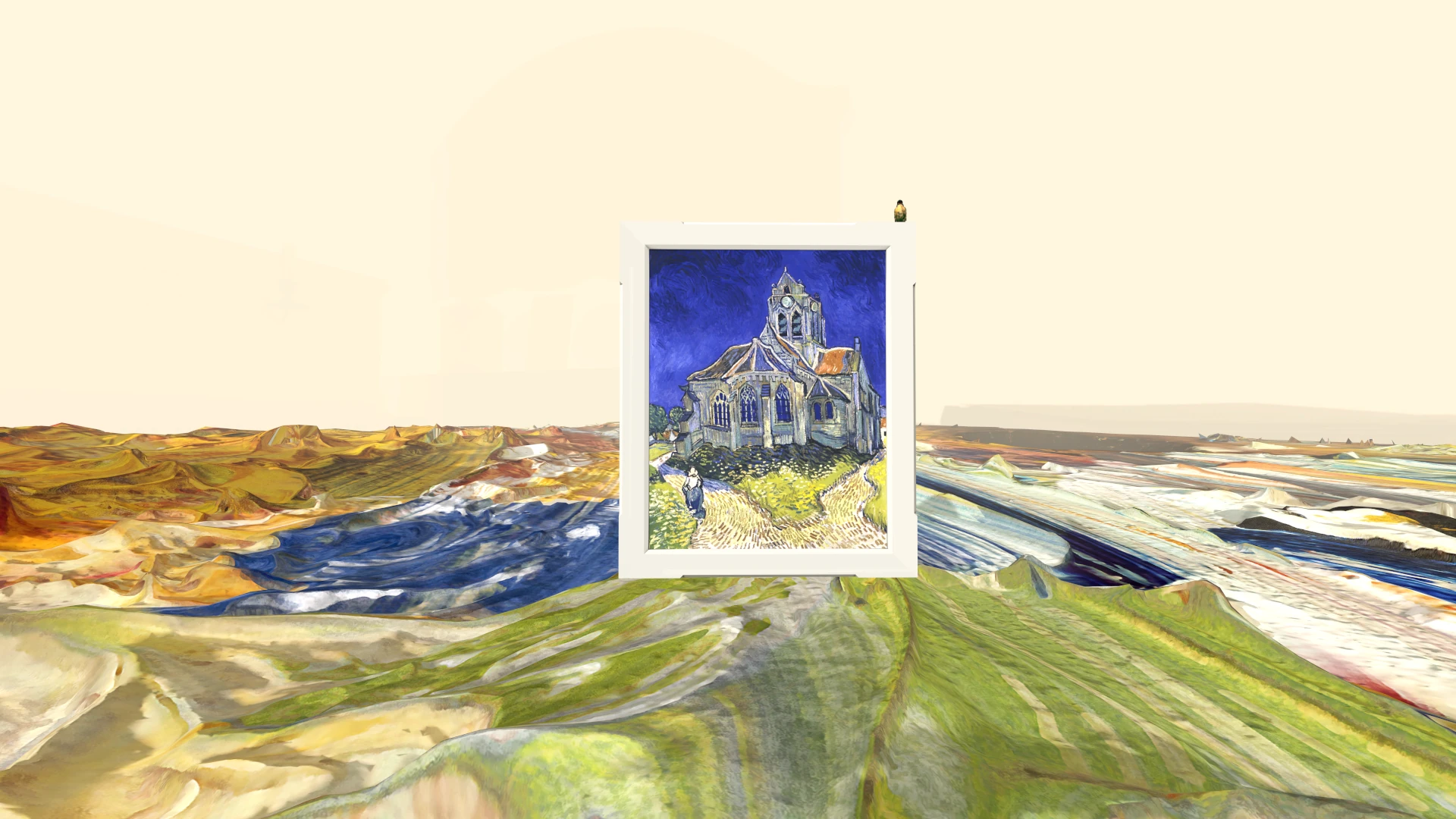
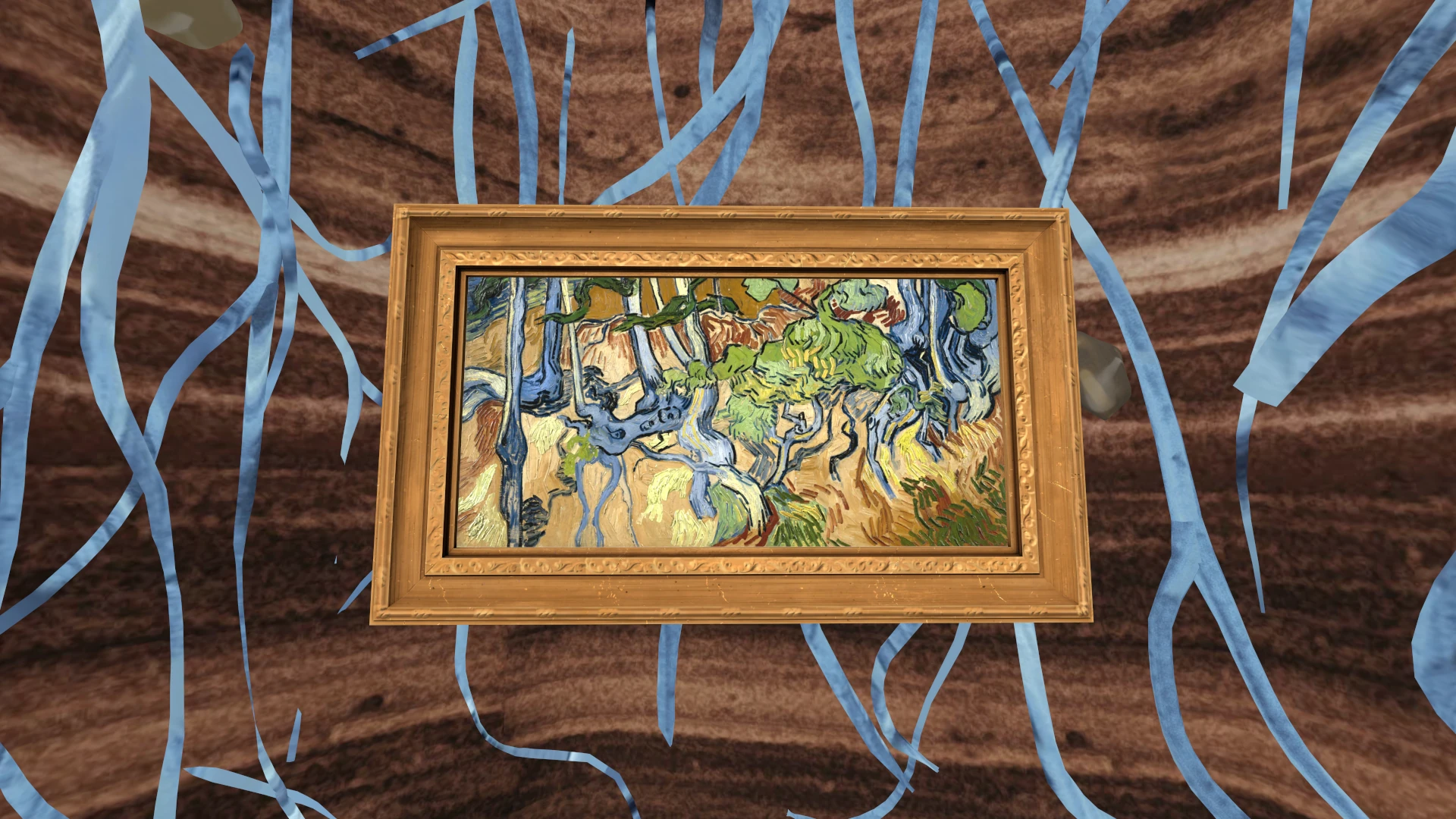
Cette palette fait aujourd’hui partie de la ­collection du musée d’Orsay. En servant ici de paysage virtuel imaginaire, La palette de Van Gogh offre aux visiteurs une expérience interactive et ­sensorielle ­inédite autour d’œuvres peintes par Van Gogh au cours de cette période cruciale de sa carrière.

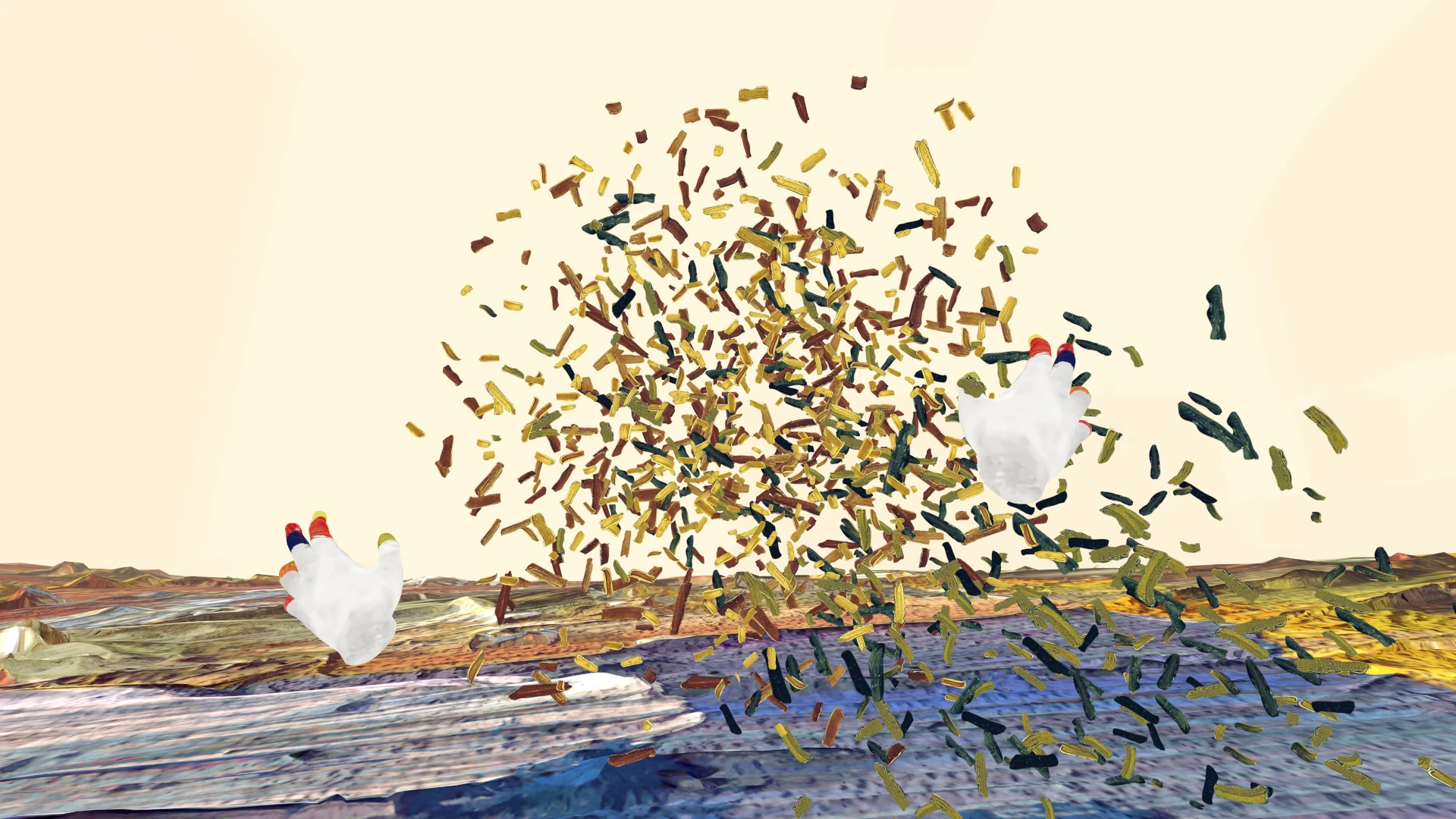
La palette : pour recréer en 3D la palette de Van Gogh il s’agissait de retrouver la matérialité de la peinture sculptée par les coups de pinceaux ainsi que toutes les minuscules variations des couleurs grâce à l’utilisation d’un logiciel de photogrammétrie.

Le guide : dans cet univers le guide est Le Martin-pêcheur peint par Van Gogh, tableau qui se trouve aujourd’hui au musée Van Gogh d’Amsterdam. Son vol indique, à chaque fois, la zone de la palette dans laquelle l’utilisateur est téléporté et des objets avec lesquels il est invité à interagir.

Interagir avec la matière : les interactions proposées – tout au long de l’expérience – permettent de manipuler la matière picturale de Van Gogh pour comprendre sa façon de travailler. Tout le corps de l’utilisateur est engagé dans ce face-à-face avec la peinture. Trois types d’interactions ont été développés : la distorsion, les couleurs, les coups des pinceaux.

La musique : les notes au piano, sont des transcriptions de Liszt des opéras de Wagner, dont Vincent van Gogh était un admirateur. Les mélodies ont été retravaillées avec des effets de ralentissement ou d’accélération qui suggèrent la perte de repères et le temps suspendu pendant que l’artiste peignait ses œuvres.
“Lorem ipsum dolor sit amet consectetur adipiscing elit. Quisque faucibus ex sapien vitae pellentesque sem placerat. In id cursus mi pretium tellus duis convallis.”
– Quotee, Quoted

Three Direct Questions

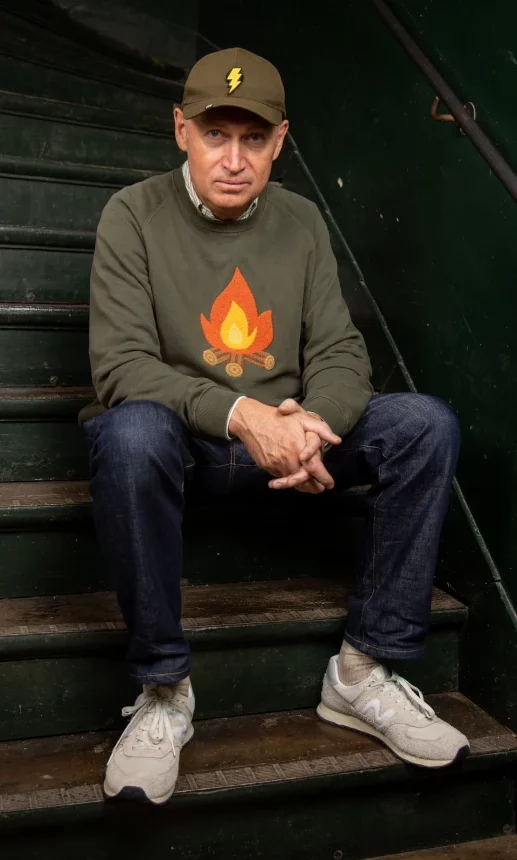
Philippe Cohen Solal, Director

Philippe Cohen Solal, a French musician, composer, and producer, is a founding member of Gotan Project.


An eclectic artist and technology enthusiast, he drew inspiration from the works of Henry Darger, a major figure in Art Brut, to create his transmedia project INSIDER-OUTSIDER, which combines live performance, music, and immersive experiences.


What drew you to Darger's work?

I discovered Henry Darger and Art Brut at the American Folk Art Museum in New York in 2003 during a U.S. tour with Gotan Project. By chance, I also met his heirs. Darger’s work, primarily analog, is made up of collages, drawings, and texts. This self-taught artist, who operated outside modern art conventions (“outsider”), was a genius in both drawing and literature, creating throughout his life without ever showing his work.

Darger embodies pure creativity and is the definition of Art Brut. There’s no intention of external validation; he creates primarily for himself.His world fascinated me, with its depiction of a rich, imaginary battle between the realms of children and adults. But, to me, it called for a complementary musical and auditory dimension.

Initially, my collaborator Mike Lindsay and I composed music based on Darger’s song lyrics, while showcasing a handcrafted panorama of his drawings and paintings. We aimed to showcase the breadth of his work through digital means. It’s a vintage universe that evokes a form of pop culture from the 1930s to the 1960s, largely inspired by his 15,000-page collection “In the Realms of the Unreal”.

Our album was ready by the end of 2019, but, of course, COVID-19 delayed any touring possibilities. The pandemic also gave us time to consider other ways to bring OUTSIDER to the public when concerts were so limited. I decided to use 2D animation to create more polished visuals, which led me to videographer Pascal Gary (aka formazero). Together, we collaborated with the Rainbox collective, particularly Gabriel Jacquel, to develop the project’s visual concept. We ended up with short, highly narrative visual clips to accompany our music compositions, which allowed us to delve deeper into the material created by Darger.

Finally, we were able to present the full project at the Museum of Modern Art in Paris in 2021 as a performance blending DJ and VJ elements, with visuals, sound, and narration featuring actor Denis Lavant. Once the pandemic was over, I explored virtual reality to further expand OUTSIDER, inspired by immersive experiences like Blanca Li’s *Le Bal de Paris*. Exploring worlds that don’t exist fascinated me, and I was eager to return to this medium. VR offers an amazing opportunity for a suspended experience where one can explore benevolent, dreamlike worlds.

I’ve always had an organic approach to my creations, which gives me a way of moving forward that’s almost indestructible. My artistic practice is open and unrestricted. With Gotan Project, we already mixed sound and visuals, constantly seeking new challenges. The pandemic pushed us to find new ways to share our music, reimagine concerts, and communicate our work.


Transmedia and VR are part of this movement, and I came to them naturally in search of new ways to share my stories with the public. I also wanted to offer something handmade and accessible, avoiding a futuristic vision of VR limited to a few enthusiasts. INSIDER-OUTSIDER is the culmination of OUTSIDER, bringing the audience closer to what we want to offer.


Thanks to a collaboration with Lucid Realities (Chloé Jarry, Alessandra Bogi), the idea of a VR version of OUTSIDER took shape. We share a passion for contemporary art and the habit of integrating various artistic practices. I also came with a wealth of existing content: the story, images, music. The challenge was to transpose it all into virtual reality while incorporating music as an interactive element, exploring how musical interactions could function within a narrative space.


The idea was to bring all our work on OUTSIDER into the VR medium, which ties seamlessly into Darger’s imaginary-focused work. For him, the real world wasn’t suitable; he led a difficult life, with little social satisfaction. All this inspired me to create an immersive version of OUTSIDER, INSIDER-OUTSIDER, as a way to expand upon Darger’s world. It’s like creating a piece of music inspired by something you’ve just seen or read—the blend of genres is always enriching for me.

Expositions & Présentations

Musée d’Orsay

Crédits

Une expérience VR réalisée par Agnès Molia and Gordon
Conception sonore : Côme Jalibert
Direction artistique : Timothée Marnat
Lead developpeur : Julien Daniel-Moliner
Avec la voix de : Rebecca Marder
Graphistes 3D : Valentine Maugard, Alexandre Sauderais
Tech Artiste : Théotime Calandra
Conseiller scientifique : Wouter van Der Veen
Production déléguée : Lucid Realities, TSVP
Productrice : Chloé Jarry (Lucid Realities)
Directrice des productions : Alessandra Bogi (Lucid Realities)
Assistants de production : Clélie Chassignet, Maxime Goletto (Lucid Realities)
Productrice : Christie Molia (TSVP)
Directeur de production : Erwan Eliès (TSVP)
Administrateur de production : Gilbert Henrique (TSVP)
Cheffe de projet : Delphine Le Goueff
Coproducteurs : Le musée d’Orsay, VIVE Arts
Distribution : Alexandre Roux (Unframed Collection)
Avec le soutien de : CNC, de la Procirep – Société des ­producteurs et de l’Angoa